
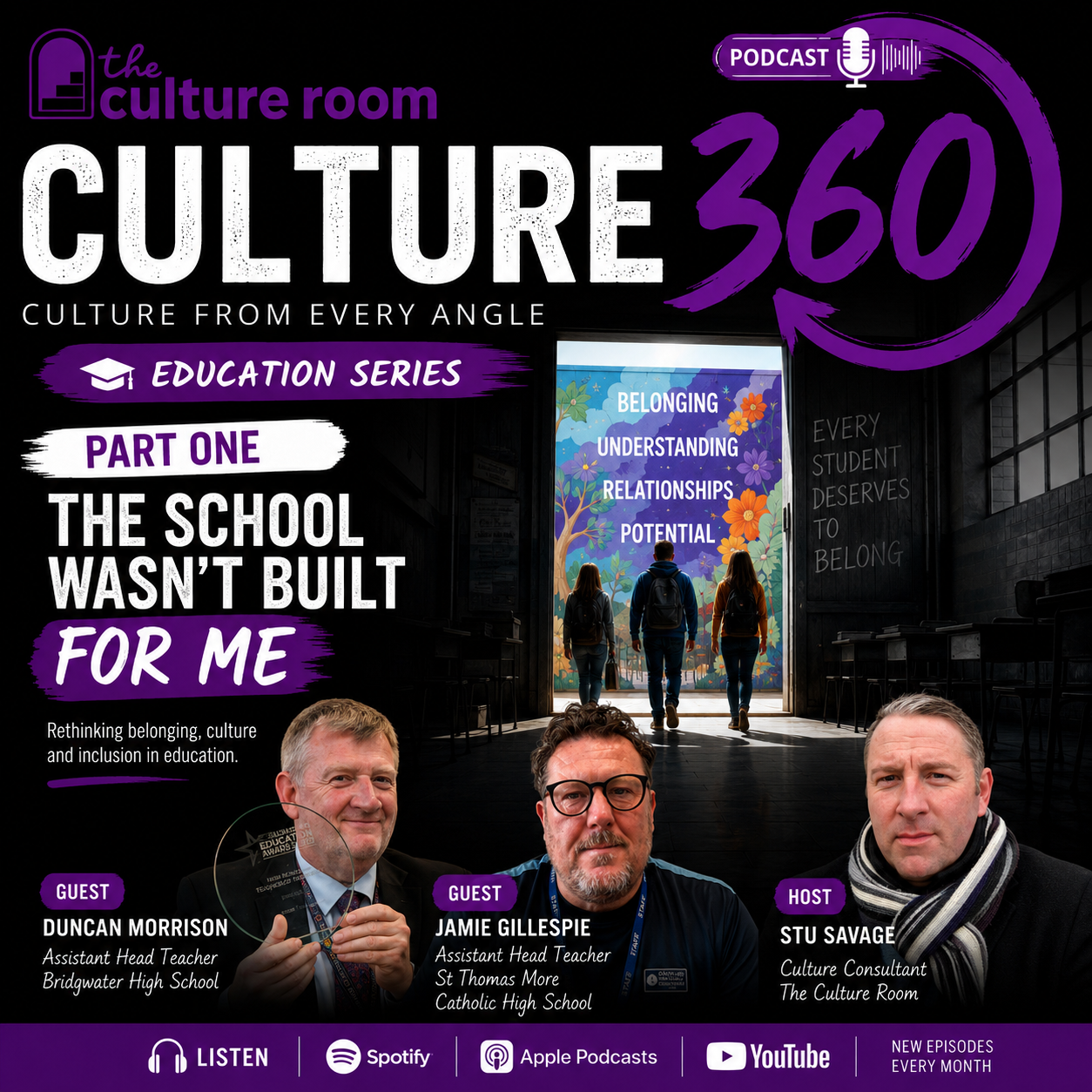
Episode 11 (Podcast) - Education Series (Part One): The School Wasn't Built for Me
What if the problem isn't the student?
Walk into almost any school and you'll find dedicated teachers, well-intentioned leaders and students doing their best to navigate an increasingly complex world.
Yet despite decades of educational reform, many young people still arrive at school each day feeling like they simply don't fit.
Not because they lack intelligence.
Not because they don't want to learn.
But because the systems, routines and unwritten rules of school were never designed with them in mind.
That is the central conversation explored in Part One of Culture 360's Education Series, where host Stu Savage is joined by Assistant Head Teachers Duncan Morrison and Jamie Gillespie to unpack one deceptively simple question:
What does it really mean to belong?
Their conversation quickly moves beyond classroom management or curriculum design. Instead, it challenges us to reconsider the very architecture of education—not the buildings themselves, but the invisible culture that shapes every student's experience.
Schools Were Never Just About Learning
When people hear the phrase "the school wasn't built for me," they often think of buildings or curriculum.
But that's not what Duncan Morrison is referring to.
He's talking about the feeling.
That moment when a student walks through the gates and unconsciously asks themselves:
Do people like me belong here?
Can I be myself?
Will I be accepted?
Is this a place where I matter?
Every organisation shows its values before any lesson starts. Schools are the same. Wall displays. Adults’ words. Who is praised. Who is corrected. Who feels seen. Who feels ignored. Culture speaks before people do.
Belonging Is Not a Soft Skill—It's a Human Need
For years schools judged success by grades, attendance and behaviour. Neuroscience shows something else: people are wired to belong. When students feel safe, they learn better—more curious, creative and open. When they feel excluded or judged, their bodies go into protection mode and learning shuts down.
Belonging isn’t just “making students feel nice.” It creates the conditions for learning. Research links belonging to better grades, attendance, behaviour, resilience, wellbeing and teacher retention. Belonging is not an extra program — it’s the foundation for everything else.
Every School Has a Hidden Curriculum
Alongside maths, English and science is another curriculum that rarely shows up on timetables: the hidden curriculum. These are the unspoken rules students learn quickly: how to speak, how to behave, what success looks like, which personalities are rewarded, which differences are tolerated, and which identities are celebrated. Most schools don’t plan this; it just develops. But unplanned change often creates exclusion. Students who fit the culture thrive. Others use huge emotional energy trying to work out the rules.
Compliance Is Not Connection
A key theme is the difference between compliance and belonging. Schools have long focused on behaviour management: sit still, be quiet, follow instructions, don't question authority. Routines matter, but compliance isn't the same as engagement. A quiet classroom can still exclude students. They can behave yet feel disconnected, achieve yet feel unseen. True belonging asks: who does this system serve, and who does it leave behind?
Behaviour Is Communication
One big shift in education: see behaviour as communication. Instead of "What's wrong with this child?" ask "What is this behaviour telling us?" Behaviour often shows needs words don't: anxiety, fear, confusion, trauma, overstimulation, loneliness, a need for connection. Viewed this way, behaviour is less defiance and more unmet need. That doesn't remove responsibility, but it starts with curiosity, not judgment.

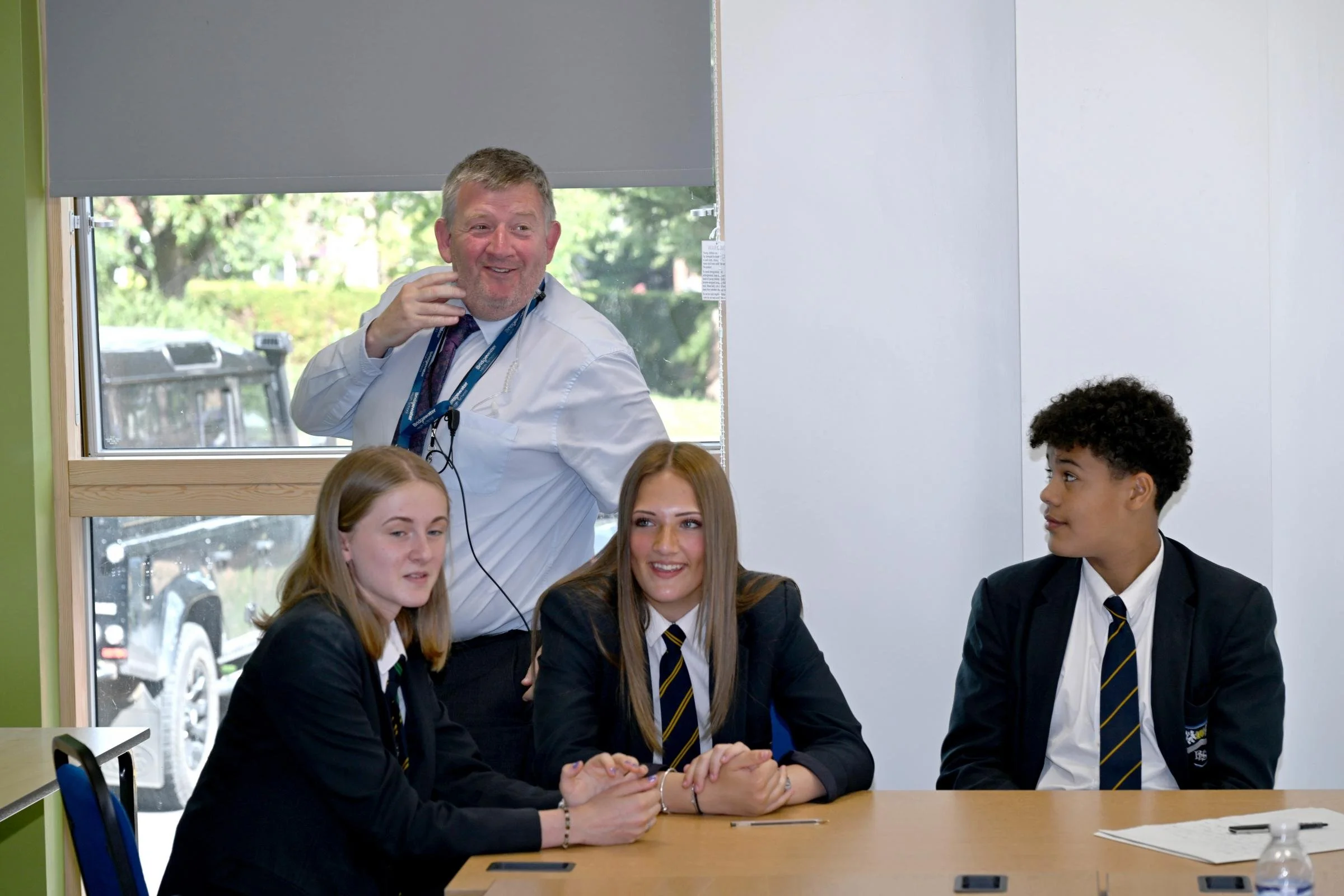






Culture Happens Whether You Design It or Not
One of the recurring ideas throughout Culture 360 is simple:
Every organisation already has a culture.
Is it intentional? Schools spend lots of time designing curriculum but far less on culture. Yet culture shapes how students experience that curriculum. A great strategic plan matters little if students don't feel safe enough to take part. The most effective schools deliberately design:
Relationships
Trust
Psychological safety
Inclusion
Staff wellbeing
Student voice
Shared purpose
Culture is not what is written in policy.
Culture is what people experience every day.
Belonging Starts With Adults
School culture is made by adults, not students. Young people react to it. That’s why leadership matters: the words leaders use, the talks they start, the behaviour they reward, the mistakes they own, and the empathy they show. Every interaction shapes the culture. Belonging isn’t just for wellbeing or pastoral teams — it’s everyone’s job.
The Lessons Extend Beyond Education
Though this focuses on schools, it applies to any workplace. Do people feel safe to speak up? Can they be themselves? Are different views welcomed? Is leadership approachable? Do people feel they belong? These questions matter whether you lead teachers, engineers, health workers or retail staff. People do their best when they feel valued. Culture is about people first, then the organisation.
Belonging Is Built One Interaction at a Time
Belonging doesn't come from a single programme. Not from a poster on a wall, an occasional assembly, or one standalone initiative. It grows from thousands of small everyday moments: a teacher who remembers a student's name, a leader who genuinely listens, a classroom where mistakes are treated as learning, a curriculum that reflects the lives of students, a lunchtime conversation where someone's view is heard and matters. Culture isn't created in occasional annual planning days. It's built and reinforced every single day.
Final Thoughts
Education is more than sharing knowledge. Its main goal is helping young people find themselves and their potential. That journey is much harder when students worry if they belong. The real question may not be whether students fit our schools, but whether our schools are built for every student. When belonging comes first, learning isn't just easier — it becomes possible.
In case you missed it…
The Culture 360 Blog & Podcast (Ep 5): Navigating Educational Climate and Culture: Leadership Lessons. When Assistant Head Teacher Duncan Morrison reflects on school culture, he doesn’t reach for theory—he talks about a feeling. “The smell of self-esteem”, as he calls it, is the unmistakable energy when students want to be there, when they feel seen, safe, and valued.